


There is a particular phrase that surfaces early in most engagement conversations — one that seems harmless and is offered warmly, but that quietly shapes the entire planning experience in ways couples rarely anticipate. That phrase is this: it’s the bride’s day. It appears in magazines and on social media, in conversations with vendors, in the assumptions of well-meaning family members. And while it is spoken with genuine affection, it carries within it a premise worth examining: that a wedding belongs primarily to one of the two people getting married. That premise, when accepted without question, tends to create problems that unfold slowly and compound over time.
Where the Narrative Came From
The idea that a wedding is primarily the bride’s event has a history, and that history is worth briefly understanding. In previous generations, the bride was not simply the central figure of the celebration — she was, in many contexts, the subject of the event in a social and legal sense as well. Marriage marked a significant transition in a woman’s life in ways that had no direct equivalent for the groom. The ceremony reflected that reality.
That context has changed substantially. Most couples today enter marriage from a position of relative equality — equal legal standing, shared financial lives, shared households in many cases. The wedding planning process has not always caught up with that shift. The bride’s-day framing persists, largely because tradition persists, and because the wedding industry has historically been built around it.
A framing that was shaped by a particular historical moment does not have to define how couples plan today. Most couples, when asked honestly, do not want a wedding that belongs to only one of them.
What Happens When One Partner Is Treated as Secondary
When the bride’s-day narrative is accepted at face value, the practical result is often that one partner — usually the one who is not the bride — is subtly positioned as an interested bystander rather than a participant in the planning. Vendors address their questions to one person. Family members offer their opinions to one person. Decisions accumulate around one person’s preferences, because the assumption is that those preferences are what the wedding is for.
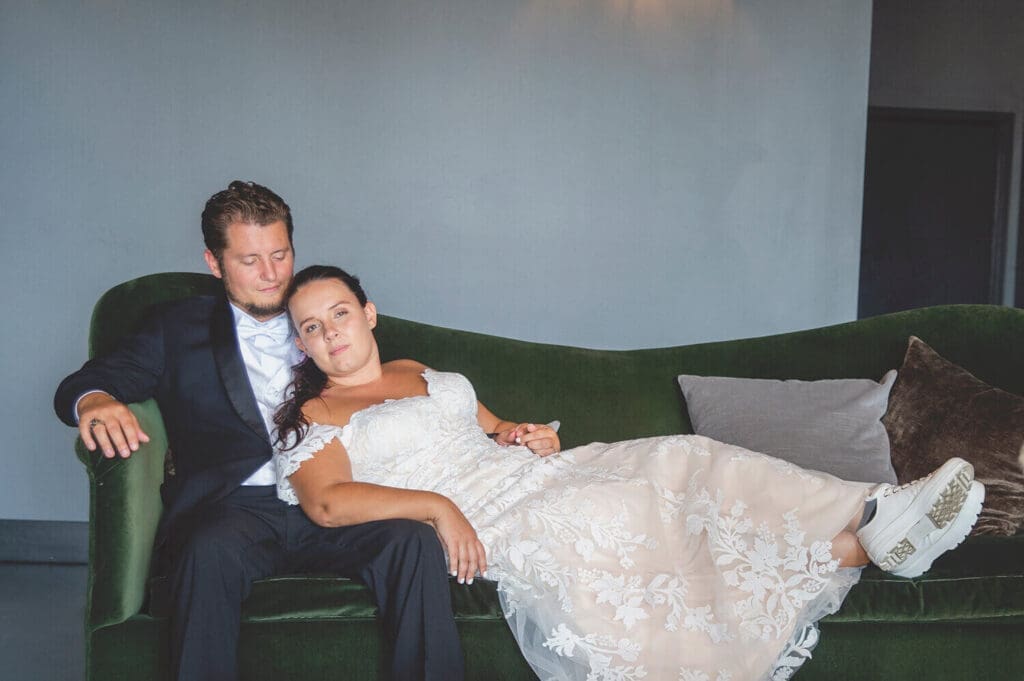
The partner who is sidelined may not initially object. They may use language like “whatever you want” or “I trust your judgment” — and mean it genuinely, at least at first. But over months of planning, the cumulative effect of being uninvolved tends to produce a subtle distance from the event itself. And that distance, carried into the wedding day, is visible. The most present couples on a wedding day are almost always the ones who built the day together.
The Difference Between Leading and Excluding
It is worth drawing a clear distinction here: having one partner take a stronger planning role is not the same as excluding the other. In most relationships, one person will naturally have stronger aesthetic preferences, more bandwidth for logistics, or simply more enthusiasm for the process. That is entirely normal and often efficient.
The meaningful question is not who does more of the planning work. It is whether the other partner is genuinely consulted on the decisions that matter. Leading looks like doing the research and then bringing your partner into the choices. Excluding looks like making the choices and then informing your partner of the outcome. The first approach is collaborative even when it is asymmetric. The second is not.
The couples who look most like a team on their wedding day are almost always the ones who made decisions together throughout the planning process — not necessarily equally, but genuinely.
The “Whatever You Want” Conversation
One of the most common dynamics in wedding planning is the partner who responds to every question with “whatever you want.” It is a response that sounds like generosity, and sometimes it genuinely is. But it can also mean something more complicated: that the partner does not know how to enter a conversation that has already been implicitly assigned to someone else, or that they have preferences they do not feel invited to share.
Before that dynamic takes hold, it is worth creating a specific opening. Not a general “do you want to be involved?” but a more direct question: is there any part of this day that you care about deeply? Are there moments that matter to you in a way I should know about? What would make you feel like this wedding was genuinely yours too?
Those questions tend to produce more honest answers than the broad ones. And the answers, whatever they turn out to be, become the foundation for a more collaborative process.
Practical First Steps Toward a Shared Process
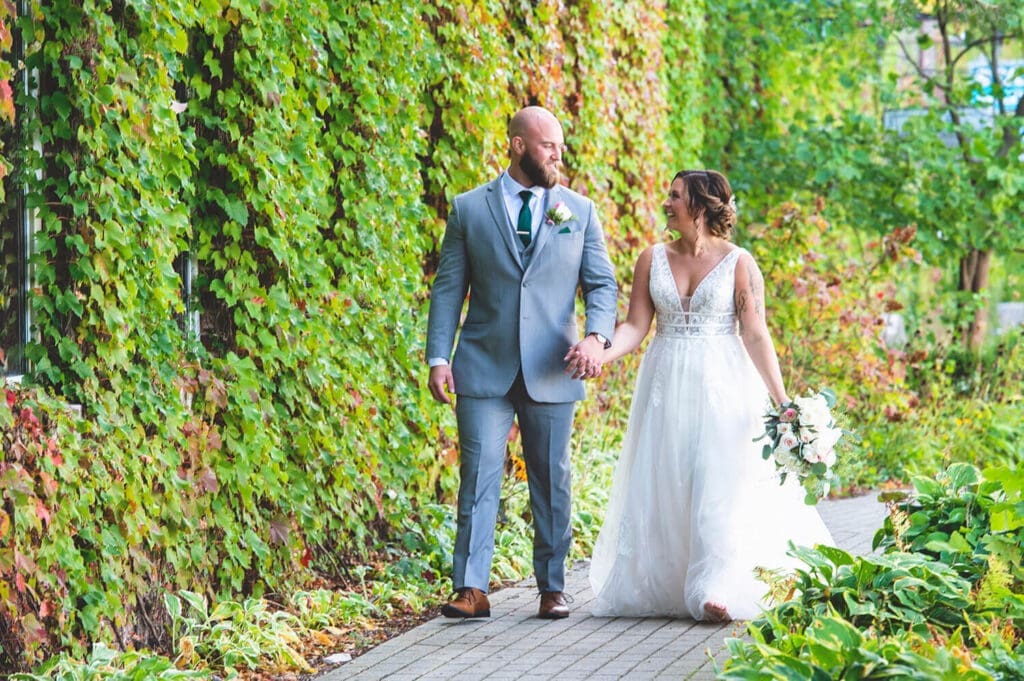
The simplest way to begin involving a partner more genuinely is to start before the formal planning does. Before a venue is toured or a vendor is contacted, set aside a real conversation — not a brief check-in, but a dedicated hour — to ask each other what you each want the day to feel like, what you each care most about, and how you want to make decisions together throughout the process. That conversation, held early, tends to prevent the dynamics that make involving both partners harder to correct later.
From there, the practical work of sharing the planning becomes more natural. Some couples divide it by area of interest. Some build in joint decision-making for the big categories and individual latitude for the smaller ones. What matters less than the specific structure is that both partners understand and have agreed to it — so neither one ends up surprised by how the process has unfolded.
What the Day Looks Like When Both Partners Are In It
There is something recognizable about a wedding that was built by two people who were both genuinely involved. It is visible in the details — in the music that reflects both of them, in the ceremony language that sounds like both of them, in the way both partners carry themselves through the day with an ease that comes from genuine investment rather than polite attendance.
It is also visible in the quieter moments: in the way a couple looks at each other during a toast that acknowledges something true about both of them, in the comfort of sharing a room that was built around both of their lives, in the absence of the faint strangeness that can settle over a partner who has spent the day in an event they did not fully help create.
The wedding that belongs to both partners is not simply a nicer event. It is a more honest beginning — a more accurate representation of the partnership it is meant to celebrate.
Retiring the Myth
Letting go of the bride’s-day framing does not require discarding the traditions or the beauty associated with it. It simply requires a shift in the underlying question: not “what does the bride want?” but “what do the two of you want?” That question, asked consistently throughout the planning process, changes the nature of the work and the texture of the day that results from it.
The couples who arrive at their ceremony most genuinely ready are almost always the ones who built it together. Not because the planning was always easy, but because the effort of building something together is part of what makes the day — and the marriage that follows it — feel like theirs.



+ show Comments
- Hide Comments
add a comment