


The ceremony is the reason for the day. Everything else — the reception, the food, the dancing, the florals — exists in service of this: two people making a public commitment to each other, witnessed by the people who love them. And yet, in many wedding planning processes, the ceremony receives less intentional attention than the table settings. The guest list, the venue, the catering — these discussions can take up months of planning time. The ceremony itself is often addressed in a few conversations close to the date. It’s worth examining that pattern. Because a ceremony that is planned with genuine intention tends to be the part of the day that couples and guests carry with them longest.
The Ceremony Is the Point — Plan It Like It Is
When couples look back at their wedding day, the ceremony is almost always where the most significant emotional memories live. The moment of seeing each other at the altar. The words spoken — by the officiant, in the vows, in a reading that landed unexpectedly. The silence after something important was said. The first kiss as married people.
These memories are not incidental. They are the result of a ceremony that was planned to create them. A ceremony where the words had genuine weight. Where the pacing allowed emotion to land rather than rushing past it. Where the couple was present enough to actually feel what was happening.
Give the ceremony the planning attention it deserves. It is the moment everything else exists to support.
The Officiant: Voice, Story, and Presence
If there is one ceremony decision that shapes the experience of the entire ceremony, it is the officiant.
The officiant’s role is to guide the ceremony — to tell the couple’s story, to frame the vows in a way that gives them weight, to manage the pacing and the pauses, to be a warm and grounding presence that helps the couple and their guests feel held through the experience.
Meeting with your officiant — not just once, but enough to share your story, your tone preferences, your vow style, and what you want guests to feel during the ceremony — is one of the most valuable investments of time in the entire planning process. The best officiants take that information and craft something personal. The best ceremonies feel like they were written for that specific couple.
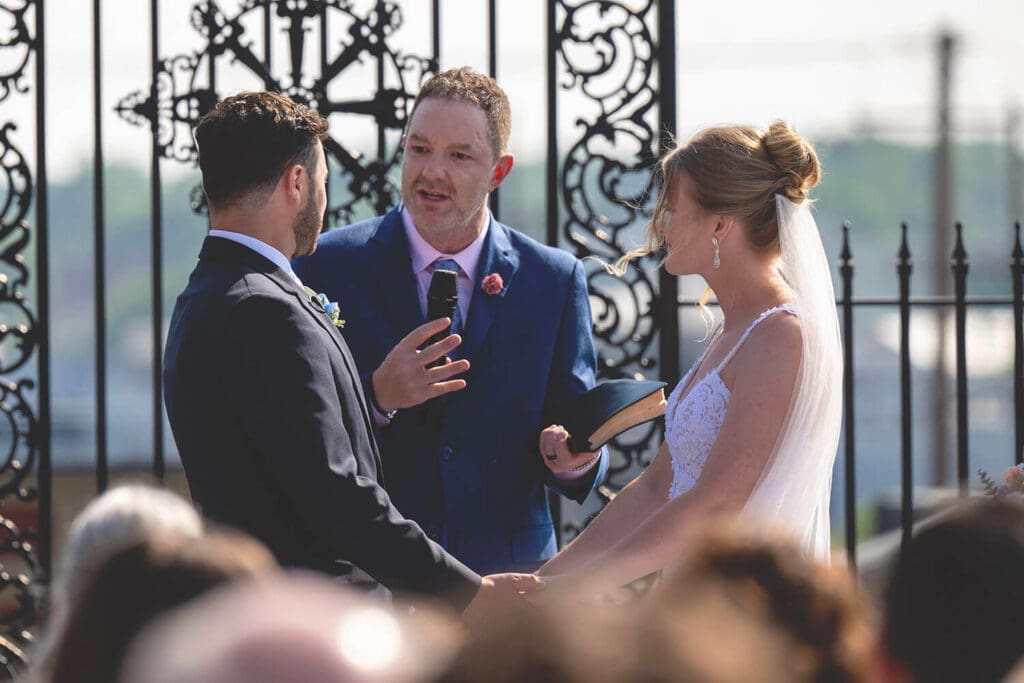
Personal Vows vs. Traditional Language: Revisited
The vow question deserves its own consideration in the context of ceremony meaning. Personal vows, when they are honest and specific, carry a particular kind of weight — the couple speaking directly about the actual texture of the commitment they’re making, in the specific language of their specific relationship.
Traditional vow language carries a different weight — the shared gravity of words spoken at thousands of ceremonies before this one, the comfort of language that is larger than any single couple.
Both can be profound. Both can fall flat — personal vows when they feel performed or hurried, traditional vows when they feel mechanical. The question is which form of expression is most authentically yours. That is the one worth choosing.
Ceremony Rituals: What to Include and Why
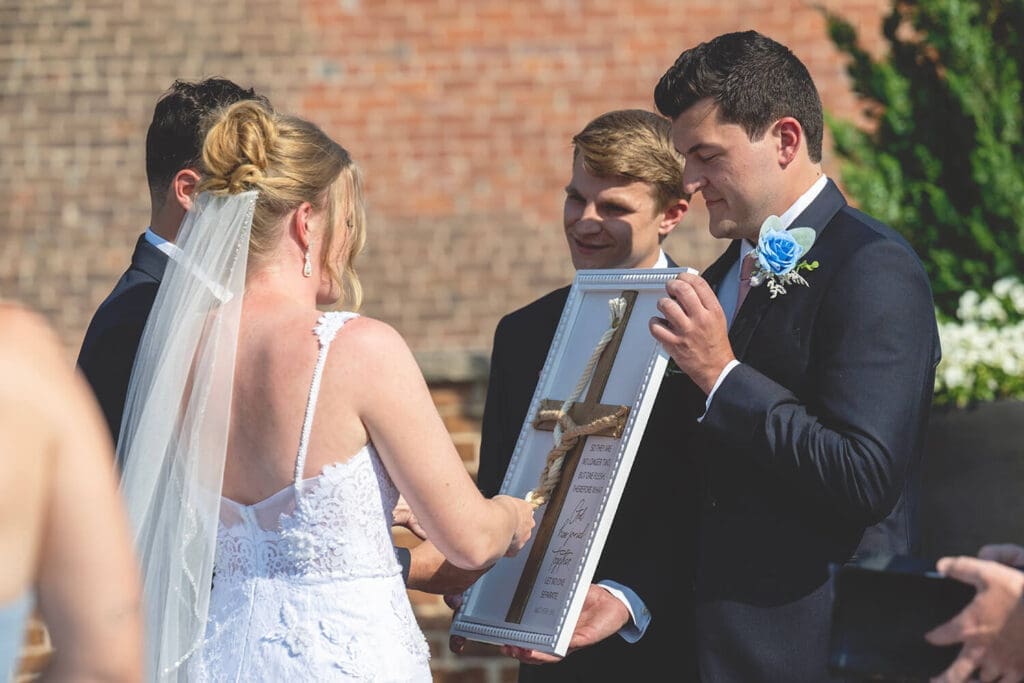
Unity candles, sand ceremonies, ring warmings, hand fastings, wine ceremonies — there are many symbolic elements available to couples, each of them capable of being genuinely meaningful.
The question worth asking about each: does this element carry genuine significance for us — for our relationship, our values, our families — or are we including it because it’s an option?
A ceremony that includes three or four symbolic elements because they were available tends to feel assembled. A ceremony that includes one because it genuinely means something tends to feel focused and real. The symbolic elements that land most powerfully are the ones the couple can speak to — where they can say, clearly, why that particular ritual belongs in their ceremony.
Ceremony Length: Presence Over Thoroughness
There is a version of ‘thorough’ in ceremony planning that asks too much of the room. Guests who are seated for 40 or 50 minutes in a ceremony that runs through every possible inclusion may be physically present — but they may not be with you in the way a 20-minute ceremony that says exactly what needs to be said would produce.
The most powerful ceremonies are rarely the longest ones. They are the ones that use their time with intention — saying what is genuinely meaningful, at a pace that allows it to land, without filling space for the sake of it.
Brevity with intention is not minimalism. It is respect — for the couple, for the guests, and for the significance of the moment.
Consider what your ceremony genuinely needs. The exchange of vows. The words that tell your story. Perhaps one reading or ritual that carries real meaning. The pronouncement. The kiss. For many couples, that is the ceremony — and it is enough.
Planning to Be Present
One of the most consistently reported gaps between what couples expected about their wedding day and what they actually experienced is this: the ceremony moved faster than they expected, and they were not as present as they’d hoped.
Presence in your own ceremony is not automatic. It is the result of specific, plannable choices:
- Rehearsing enough to feel confident in what’s happening and when, so attention can be given to feeling rather than logistics
- Choosing vows and readings that are genuinely yours, so reciting them doesn’t require performance
- Working with an officiant who is guiding the ceremony rather than requiring the couple to lead it
- Building moments of stillness — genuine pauses rather than filling every second with words or music
- Doing whatever personal preparation helps you arrive emotionally ready, whether that’s quiet time before the ceremony, prayer, a few minutes alone with your partner, or whatever grounds you
The ceremony is the moment you’ve been planning toward. It deserves the kind of planning that allows you to actually be there for it.



+ show Comments
- Hide Comments
add a comment