


Let’s talk about where your wedding budget is actually going to go. No matter how carefully you plan, the big five categories will likely eat up 75–85% of your total spend. That’s your venue, catering, photography and videography, florals and décor, and the whole ecosystem your guest count creates.
Understanding these categories before you book anything gives you a serious advantage. You’ll know which questions to ask. You’ll know where your dollars hit hardest. And you’ll avoid that gut-punch moment — the one where the venue you fell in love with costs three times what you budgeted once you add up what’s not included.
That’s what today is about: getting crystal clear on the big numbers so the rest of your planning actually works.
Why These Five Categories Eat Most of Your Wedding Budget
Here’s the truth nobody tells you upfront. Your wedding budget is not evenly distributed. A few categories dominate. The rest fill in the gaps.
The big five — venue, catering, photography/videography, florals, and your guest count ripple effect — command the lion’s share of every wedding budget. Combined, they typically run between $25,000 and $45,000 for a traditional Midwest wedding. In major metro areas? Way more. Knowing this before you fall in love with a vendor is everything. It protects you from overcommitting in one area and keeps the rest of your planning realistic.
Breaking Down Venue Costs: What’s Included and What’s Not
The Sticker Price Is Never the Full Price
This is where couples get burned most often. A venue quotes you $4,000 for the space. Sounds manageable, right? Then you start reading the contract.
- Tables and chairs: extra
- Linens: extra
- Catering kitchen access: extra
- Setup and breakdown: extra
- Parking attendants: extra
Suddenly that $4,000 venue is a $7,500 venue. And you’re already signed.
What to Budget for Your Venue
On average, wedding venues run between $3,000 and $12,000 depending on your region, day of the week, and season. Indoor venues with built-in amenities usually cost more upfront but less overall. Outdoor or raw spaces often look cheaper but require you to bring in everything.
Your venue should represent roughly 30–35% of your total reception budget. If it creeps toward 50%, something else will have to give.
Smart Questions to Ask Before You Sign
- What is included in the base rental fee?
- Are tables, chairs, and linens provided?
- Do you have a list of required or preferred vendors?
- What is the setup and breakdown timeline?
- Are there noise ordinances or end times?
- What happens if we need to reschedule?
Get the answers in writing. Every single one.
Catering Per-Head Costs: What to Expect in Your Region
The Number That Changes Everything
Catering is priced per person. That means your guest count directly controls this line item. Every additional guest adds real dollars. Here’s a rough breakdown by service style:
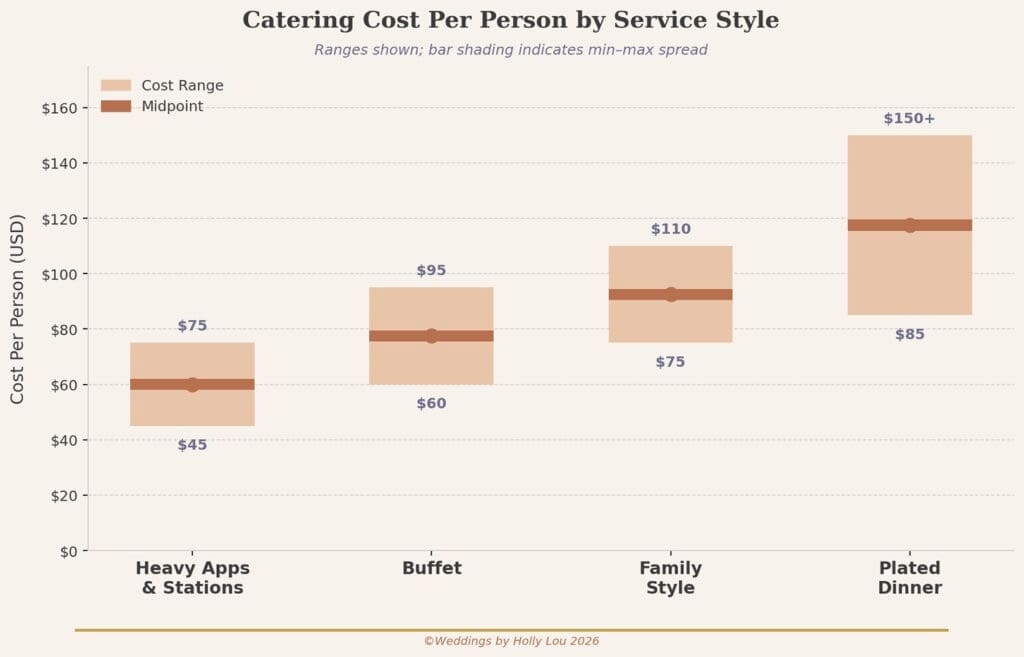
These numbers don’t include bar service. Budget another $20–$45 per person for a standard open bar package.
What Drives Catering Costs Up
- Premium proteins like filet or lobster add $20–$40 per person instantly
- Late-night snacks are trendy and delicious — but they cost extra
- Specialty dietary options require separate prep and usually upcharge
- Staff gratuity is often not included in the quote — ask specifically
In the Midwest, a solid buffet with bar service typically runs $100–$130 per person all in. Coasts run higher. Rural areas may run lower. Research locally before you build your budget.
Why Photography and Videography Deserve 15% of Your Budget
This Is the One You Cannot Undo
Y’all, I’m a wedding photographer. I’m obviously a little biased here. But hear me out.
Every other vendor’s work disappears after the wedding day. The flowers wilt. The cake gets eaten. The band packs up and goes home. Your photos and your video? Those last forever.
This is not the category to bargain hunt. A photographer who charges $1,200 and a photographer who charges $3,500 are not offering the same thing. The gap shows up in low light. It shows up in how they handle a chaotic timeline. It shows up in whether your great-grandkids will actually want to look at those photos someday.
What to Realistically Budget
For a full-day photographer in the Midwest, expect to pay $2,500–$5,000 for someone with real experience and a consistent portfolio. Videography typically runs $2,000–$4,500 for a solid package.
Together, that’s $4,500–$9,500 — or about 15% of a $35,000 wedding budget. That percentage is there for a reason. Honor it.
Questions to Ask Every Photographer and Videographer
- How many weddings have you shot at this venue or in this lighting?
- What is your backup plan if you get sick or have an emergency?
- How long until we receive our final gallery or video?
- What does your editing style look like in low light specifically?
- Do you have liability insurance?
- What packages include both photo and video together?
Look at full galleries — not just highlight reels. Anyone can cherry-pick 20 beautiful images.
Smart Floral Budget Allocation: Where Flowers Actually Matter
Not Every Table Needs a $300 Centerpiece
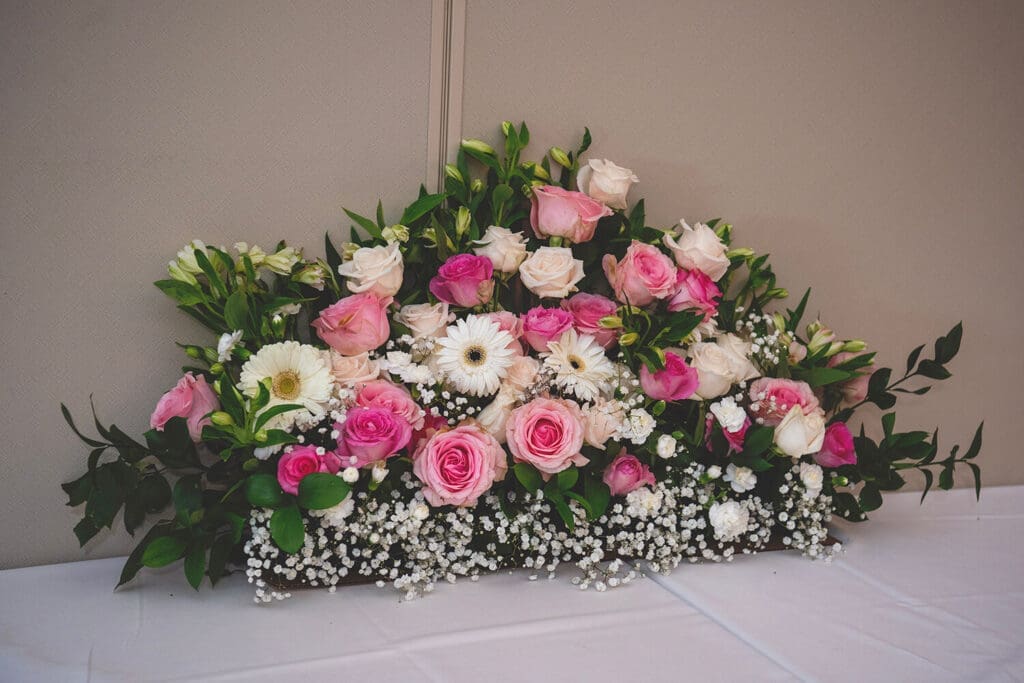
Florals are one of the easiest places to overspend without realizing it. A florist gives you a quote. It sounds reasonable per arrangement. Then you count how many arrangements you actually need and suddenly you’re staring at a $12,000 floral bill for a 100-person wedding.
Flowers have a hierarchy of impact. Some placements move the needle on photos and ambiance. Others are barely noticed.
Where Flowers Actually Make a Difference
High impact placements:
- Ceremony arch or altar piece
- Bridal bouquet
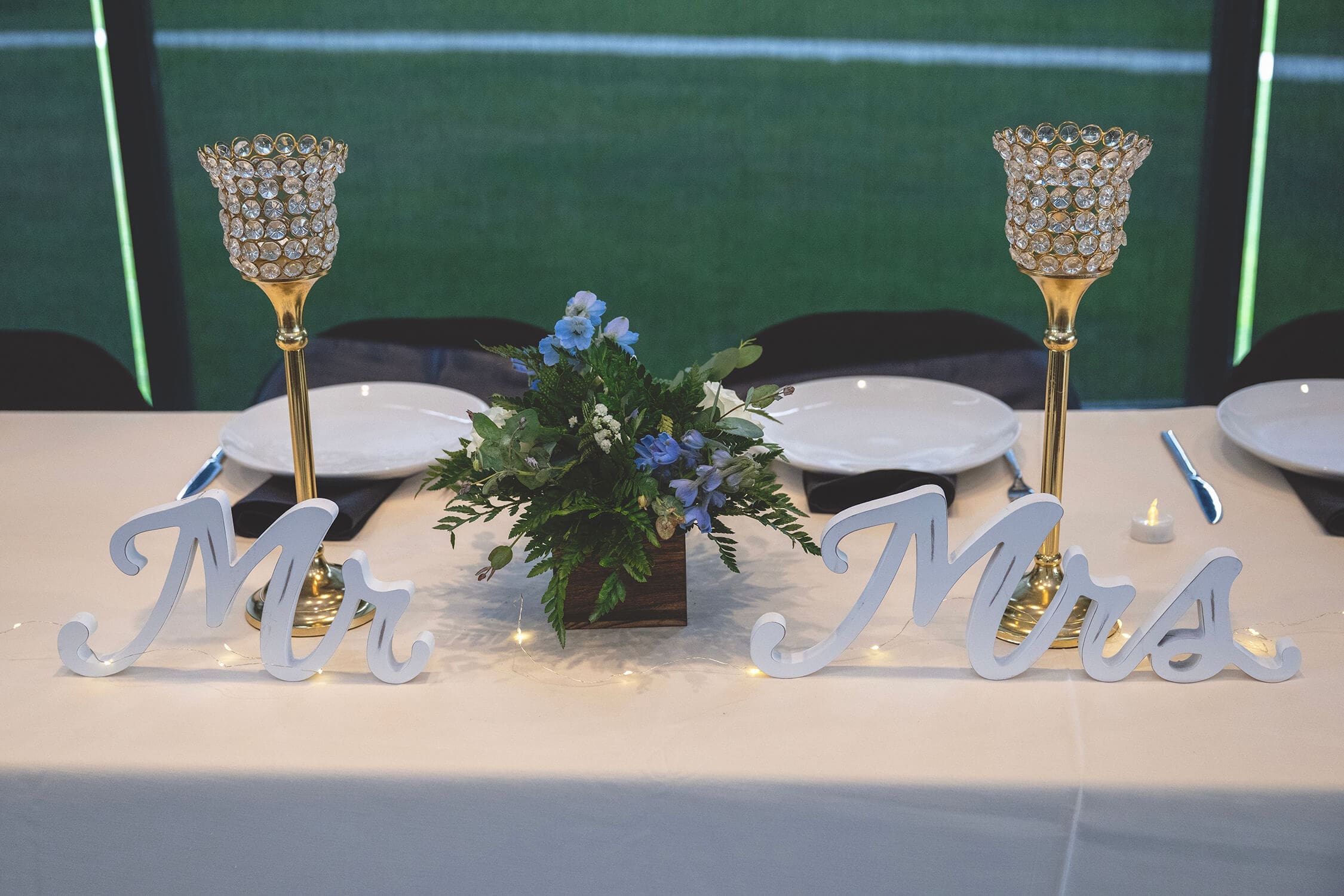
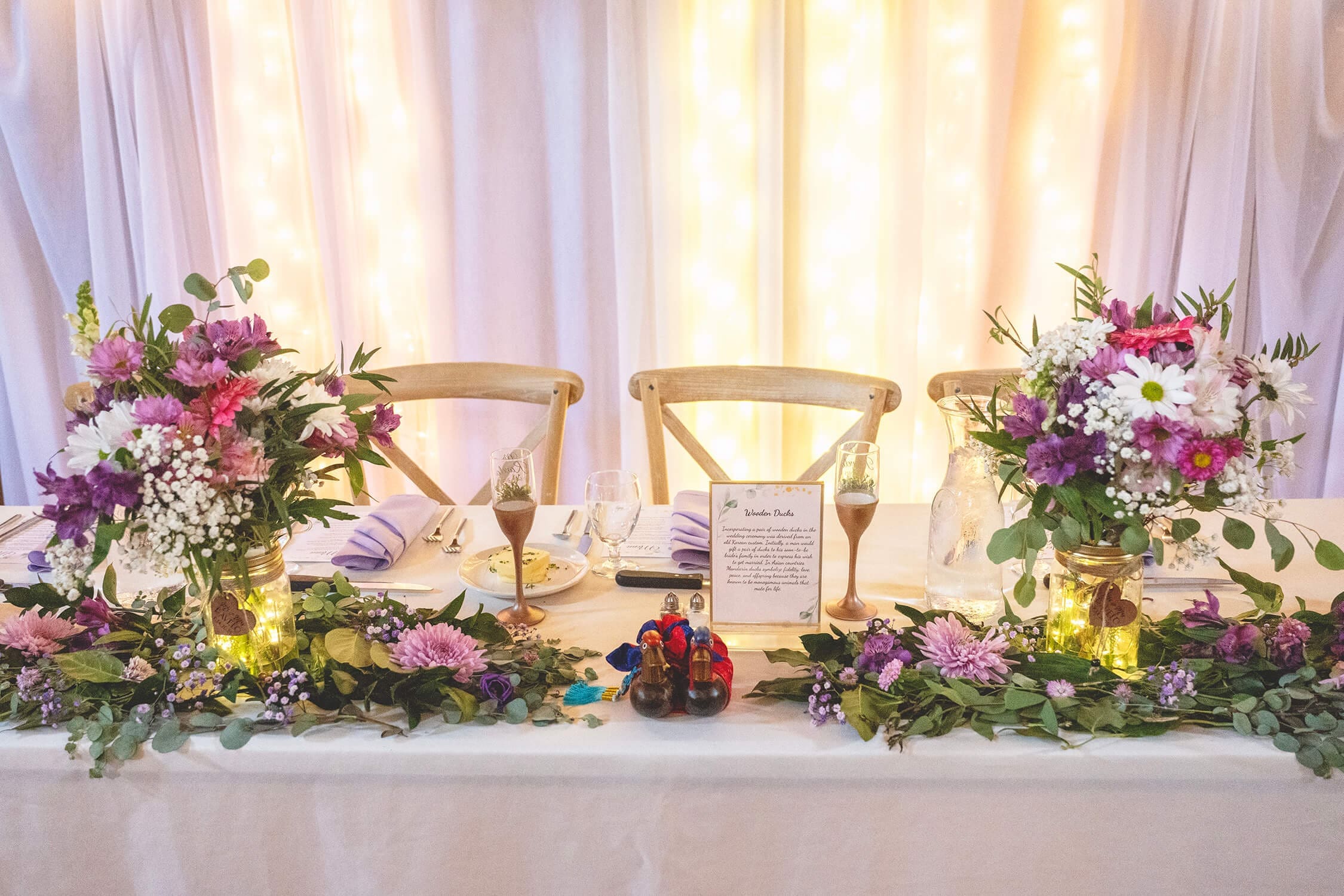
- Head table or sweetheart table florals
- Ceremony aisle accents
Lower impact placements (consider alternatives):
- Guest table centerpieces — candles, greenery, or dried florals cost far less
- Cocktail hour tables — a single bud vase does the job beautifully
- Cake florals — fresh blooms from a grocery store work just as well
A Realistic Floral Budget
Most couples spend $2,500–$6,000 on florals for a traditional wedding. If you’re prioritizing photography — and you should be — invest where the camera will see it most. The ceremony backdrop and the bridal bouquet photograph constantly. The cocktail hour table does not.
Tell your florist your total budget upfront. A great florist will work within it. One who won’t is waving a red flag.
The Guest Count Equation: How Every Guest Affects Your Bottom Line
This Is the Lever That Controls Everything
Want to save $5,000 on your wedding budget? Cut 40 guests. It really is that direct.
Here’s why guest count is its own category in your wedding budget:
- Catering is priced per person
- Venue capacity determines your options
- Tables, chairs, and linens scale with headcount
- Favors, place settings, and programs multiply by the guest list
- Invitations and postage go up with every envelope
A guest who costs $110 per head in catering alone is actually costing you closer to $130–$150 once you factor in everything that scales with them.
How to Think About Your Guest List Strategically
Before you invite everyone you’ve ever met, run these numbers:
Total catering budget ÷ cost per person = maximum guests
If your catering budget is $12,000 and your caterer charges $120 per person all in, your guest ceiling is 100 people. Simple math. Brutal math. But honest math. Cutting from the outer rings of your guest list saves real money without sacrificing the people who matter most.
Adjusting the Big Ticket Allocations Based on Your Priorities
Make It Yours — But Be Honest About the Trade-Offs
Here’s the deal. You get to decide what matters most. But you cannot inflate every category. The budget has a ceiling.
If a jaw-dropping venue is your top priority, you may need to simplify florals and skip videography. If photography is everything — and honestly it should be — you might choose a smaller guest list to protect that line item. If an unforgettable reception party is the goal, maybe a less elaborate ceremony space makes sense.
Write down your top three priorities before you book anything. Then allocate your wedding budget to protect those three first. Fill in the rest with what’s left.
Book in priority order. Every time.
Questions to Ask Every Vendor Before You Sign
Because the Contract is Forever
No matter what category you’re booking, these questions apply across the board:
- What exactly is included in this price?
- What is not included that I might assume would be?
- What is your payment schedule and cancellation policy?
- Do you carry liability insurance?
- Have you worked at my venue before?
- What happens if you have an emergency and cannot fulfill this contract?
- Can I see a full example of your work — not just highlights?
- Are there any fees I might not expect between now and the wedding?
- When is the final headcount or decision deadline?
- What does your communication process look like leading up to the wedding?
Write the answers down. Compare them across vendors. A vendor who is evasive on any of these is telling you something.
The Bottom Line on Your Wedding Budget
Your wedding budget works when you protect the big five first. Venue, catering, photography and videography, florals, and your guest count equation — these five categories are going to shape every other decision you make.
Get clear on the numbers before you fall in love with anything. Know what’s included. Know what scales. Know where your dollars have the biggest impact on the day you’ll actually remember.
You’ve got this. And when you go into every vendor conversation with these questions ready? You’re not just a couple planning a wedding. You’re a couple who knows exactly what they’re doing.




+ show Comments
- Hide Comments
add a comment